Double Angle Formulas Quiz: Solving Equations and Evaluating Values Using Double-Angle Formulas

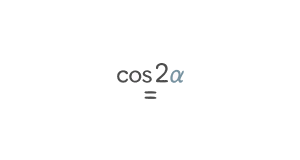
  • Grade 11th
Reviewed by Editorial Team
The ProProfs editorial team is comprised of experienced subject matter experts. They've collectively created over 10,000 quizzes and lessons, serving over 100 million users. Our team includes in-house content moderators and subject matter experts, as well as a global network of rigorously trained contributors. All adhere to our comprehensive editorial guidelines, ensuring the delivery of high-quality content.
Learn about Our Editorial Process
| By Thames
T
Thames
Community Contributor
Quizzes Created: 11121 | Total Attempts: 9,754,405
| Attempts: 18 | Questions: 20 | Updated: May 12, 2026
Please wait...
Question 1 / 21
🏆 Rank #--
0 %
0/100
Score 0/100

1) Express cos(2θ) using sine only.

Explanation

Starting from cos(2θ) = cos²θ − sin²θ and substituting cos²θ = 1 − sin²θ gives cos(2θ) = (1 − sin²θ) − sin²θ = 1 − 2sin²θ. This form is useful when the problem involves sinθ rather than cosθ. Option D reverses the sign and is incorrect.

Submit
Please wait...
About This Quiz
Double Angle Formulas Quiz: Solving Equations and Evaluating Values Using Double-angle Formulas - Quiz

How do double-angle formulas help simplify and solve trigonometric expressions? In this quiz, you’ll explore how identities like sin(2𝜃),
cos(2𝜃), and tan(2𝜃) emerge from foundational trig relationships. You’ll practice evaluating expressions, solving equations, and choosing the most efficient form of each identity. Step by step, you’ll build confidence applying double-angle formulas... see moreto problems that require precision, algebraic reasoning, and a strong grasp of trigonometric structure.
see less

2)

What first name or nickname would you like us to use?

You may optionally provide this to label your report, leaderboard, or certificate.

2) If cosθ = 0, then sin(2θ) = 0.

Explanation

The answer is True. sin(2θ) = 2sinθ cosθ. If cosθ = 0, then sin(2θ) = 2sinθ × 0 = 0 regardless of the value of sinθ. This occurs at θ = π/2 + kπ, where cos(2θ) = 1 − 2sin²(π/2 + kπ) = 1 − 2(1) = −1, confirming that 2θ lands at π + 2kπ where sin = 0.

Submit

3) If cosθ = −3/5 and θ is in Quadrant II, find cos(2θ).

Explanation

cos(2θ) = 2cos²θ − 1 = 2(−3/5)² − 1 = 2(9/25) − 1 = 18/25 − 1 = −7/25. Note that squaring cosθ removes the negative sign, so the quadrant of θ affects the sign of cosθ but not cos²θ. The result is negative because cos²θ = 9/25 < 1/2.

Submit

4) Which of the following is NOT an equivalent form of cos(2θ)?

Explanation

The three standard forms of cos(2θ) are cos²θ − sin²θ (option A), 1 − 2sin²θ (option B), and 2cos²θ − 1 (option C). Option D, 2sin²θ − 1, is the negative of the correct sine-only form: 2sin²θ − 1 = −(1 − 2sin²θ) = −cos(2θ), not cos(2θ).

Submit

5) If tanθ = 1, then tan(2θ) is undefined.

Explanation

The answer is True. tan(2θ) = 2tanθ/(1 − tan²θ). When tanθ = 1, the denominator becomes 1 − 1² = 0, making the expression undefined. Geometrically, when tanθ = 1, θ = π/4 + kπ, and 2θ = π/2 + 2kπ, which are exactly the angles where tangent is undefined.

Submit

6) Given tanθ = −3/4 and θ in Quadrant IV, find tan(2θ).

Explanation

tan(2θ) = 2tanθ/(1 − tan²θ) = 2(−3/4)/(1 − 9/16) = (−3/2)/(7/16) = (−3/2)(16/7) = −24/7. The negative result is expected because 2θ falls in Quadrant III or the second half of Quadrant II when θ is a small negative angle in Quadrant IV.

Submit

7) Solve on [0, 2π): cos(2θ) = 1/2

Explanation

cos(2θ) = 1/2 means 2θ = π/3 + 2kπ or 2θ = −π/3 + 2kπ, giving θ = π/6 + kπ and θ = −π/6 + kπ. On [0, 2π): from π/6 + kπ: π/6 and 7π/6. From −π/6 + kπ: 5π/6 and 11π/6. Verification: cos(π/3) = 1/2 ✓, cos(5π/3) = 1/2 ✓, cos(7π/3) = cos(π/3) = 1/2 ✓, cos(11π/3) = cos(5π/3) = 1/2 ✓.

Submit

8) For all θ where defined, tan(2θ) = 2tanθ / (1 − tan²θ).

Explanation

The answer is True. This is the standard double-angle formula for tangent, derived from tan(α+β) = (tanα + tanβ)/(1 − tanα tanβ) with α = β = θ. The formula is defined whenever 1 − tan²θ ≠ 0, i.e. when tanθ ≠ ±1.

Submit

9) The expression cos(2θ) = 2cos²θ + 1 is a valid double-angle identity.

Explanation

The answer is False. The correct cosine-only double-angle formula is cos(2θ) = 2cos²θ − 1, not 2cos²θ + 1. A quick check confirms the error: at θ = 0, cos(0) = 1 but 2cos²(0) + 1 = 2(1) + 1 = 3 ≠ 1. The sign between the two terms must be minus, not plus.

Submit

10) Select all solutions on [0, 2π) to cos(2θ) = −1. (Select all that apply)

Explanation

cos(2θ) = −1 means 2θ = π + 2kπ, so θ = π/2 + kπ. On [0, 2π) this gives θ = π/2 and θ = 3π/2. Verification: cos(2 × π/2) = cos(π) = −1 ✓ and cos(2 × 3π/2) = cos(3π) = −1 ✓. Options B (θ=0) and C (θ=π) give cos(0) = 1 and cos(2π) = 1, not −1.

Submit

11) Which of the following is the correct double-angle formula for sin(2θ)?

Explanation

The double-angle formula for sine is sin(2θ) = 2sinθ cosθ, derived from the sum formula sin(α+β) = sinα cosβ + cosα sinβ with α = β = θ. Option A gives the Pythagorean identity, not a double-angle formula. Option C omits the factor of 2. Option D uses squares rather than the product of sine and cosine.

Submit

12) Select all correct values of θ in [0, 2π) that satisfy cos(2θ) = 0. (Select all that apply)

Explanation

cos(2θ) = 0 means 2θ = π/2 + kπ, so θ = π/4 + kπ/2. On [0, 2π) this gives θ = π/4, 3π/4, 5π/4, and 7π/4 — four solutions in total. There are four rather than two because 2θ covers the interval [0, 4π), allowing two full cycles of cosine to reach zero.

Submit

13) Given sinθ = −5/13 and θ in Quadrant IV, find tan(2θ).

Explanation

In Quadrant IV, cosθ > 0, so cosθ = 12/13. Then tanθ = sinθ/cosθ = (−5/13)/(12/13) = −5/12. Using the double-angle formula: tan(2θ) = 2tanθ/(1 − tan²θ) = 2(−5/12)/(1 − 25/144) = (−10/12)/(119/144) = (−5/6)(144/119) = −120/119.

Submit

14) Which of the following is NOT a valid form of the double-angle formula for tan(2θ)?

Explanation

The correct double-angle formula is tan(2θ) = 2tanθ / (1 − tan²θ), not 1 + tan²θ. Option B is valid since tan = sin/cos applied to 2θ. Option C is valid since it uses sin(2θ) = 2sinθ cosθ and cos(2θ) = cos²θ − sin²θ. Option D has the wrong sign in the denominator — 1 + tan²θ = sec²θ, which gives a different and incorrect expression.

Submit

15) Solve on [−π, π]: sin(2θ) = √2/2

Explanation

Let u = 2θ, so u ∈ [−2π, 2π]. sin(u) = √2/2 gives u = π/4 + 2kπ or u = 3π/4 + 2kπ. For k=0: u = π/4 → θ = π/8 and u = 3π/4 → θ = 3π/8. For k=−1: u = −7π/4 → θ = −7π/8 and u = −5π/4 → θ = −5π/8. Verification: sin(2 × π/8) = sin(π/4) = √2/2 ✓; sin(2 × 3π/8) = sin(3π/4) = √2/2 ✓; sin(2 × (−7π/8)) = sin(−7π/4) = √2/2 ✓; sin(2 × (−5π/8)) = sin(−5π/4) = √2/2 ✓. Option A is incorrect — 5π/8 and −3π/8 produce sin values of −√2/2, not √2/2.

Submit

16) Evaluate exactly: cos(2 × 30°)

Explanation

2 × 30° = 60°. cos(60°) = 1/2. Alternatively, using the double-angle formula: cos(2 × 30°) = 1 − 2sin²(30°) = 1 − 2(1/4) = 1 − 1/2 = 1/2. Both methods confirm the answer.

Submit

17) If cosθ = 2/3 with θ in Quadrant I, find cos(2θ).

Explanation

Using the cosine-only form: cos(2θ) = 2cos²θ − 1 = 2(2/3)² − 1 = 2(4/9) − 1 = 8/9 − 1 = −1/9. Even though θ is in Quadrant I, cos(2θ) can be negative when cos²θ < 1/2, which occurs when cosθ < 1/√2 ≈ 0.707. Since 2/3 ≈ 0.667 < 0.707, the result is negative.

Submit

18) If sinθ = √3/2 and θ is in Quadrant II, what is cos(2θ)?

Explanation

Using the sine-only form: cos(2θ) = 1 − 2sin²θ = 1 − 2(√3/2)² = 1 − 2(3/4) = 1 − 3/2 = −1/2. The quadrant of θ determines sin²θ and confirms the calculation; sin²θ = 3/4 regardless of sign.

Submit

19) If sinθ = 3/5 and cosθ = 4/5 with θ in Quadrant I, find sin(2θ).

Explanation

sin(2θ) = 2sinθ cosθ = 2 × (3/5) × (4/5) = 2 × 12/25 = 24/25. Since θ is in Quadrant I, 2θ is in Quadrant I or II and sin(2θ) is positive, confirming the positive result.

Submit

20) Solve on [0, 2π): sin(2θ) = 0

Explanation

sin(2θ) = 0 means 2θ = kπ for integer k, so θ = kπ/2. On [0, 2π) the distinct solutions are θ = 0, π/2, π, and 3π/2. There are four solutions because 2θ ranges over [0, 4π), doubling the number of solutions compared to sinθ = 0.

Submit
×
Saved
Thank you for your feedback!
View My Results
Cancel
  • All
    All (20)
  • Unanswered
    Unanswered ()
  • Answered
    Answered ()
Express cos(2θ) using sine only.
If cosθ = 0, then sin(2θ) = 0.
If cosθ = −3/5 and θ is in Quadrant II, find cos(2θ).
Which of the following is NOT an equivalent form of cos(2θ)?
If tanθ = 1, then tan(2θ) is undefined.
Given tanθ = −3/4 and θ in Quadrant IV, find tan(2θ).
Solve on [0, 2π): cos(2θ) = 1/2
For all θ where defined, tan(2θ) = 2tanθ / (1 − tan²θ).
The expression cos(2θ) = 2cos²θ + 1 is a valid double-angle...
Select all solutions on [0, 2π) to cos(2θ) = −1. (Select all that...
Which of the following is the correct double-angle formula for...
Select all correct values of θ in [0, 2π) that satisfy cos(2θ) = 0....
Given sinθ = −5/13 and θ in Quadrant IV, find tan(2θ).
Which of the following is NOT a valid form of the double-angle formula...
Solve on [−π, π]: sin(2θ) = √2/2
Evaluate exactly: cos(2 × 30°)
If cosθ = 2/3 with θ in Quadrant I, find cos(2θ).
If sinθ = √3/2 and θ is in Quadrant II, what is cos(2θ)?
If sinθ = 3/5 and cosθ = 4/5 with θ in Quadrant I, find sin(2θ).
Solve on [0, 2π): sin(2θ) = 0
play-Mute sad happy unanswered_answer up-hover down-hover success oval cancel Check box square blue
Alert!